Accessible travel is often framed as all or nothing: either a traveler needs a wheelchair or they don’t. But according to travel advisors Angela and Lee Alessi, that framing ignores a large group of travelers who fall somewhere in between.
“There’s this idea that you’re either perfectly fine or you’re in a wheelchair,” Angela said. “And there’s so much in between that nobody takes into account.”
The Alessis, founders of Heirloom Journeys, focus on travelers with mobility limitations, hearing loss, sensory sensitivities, anxiety, temporary disabilities and more. They support clients who may be able to walk, travel independently and participate in activities, but not without support.
The Overlooked Middle Ground
Lee, a Marine Corps veteran, lives with mobility and hearing impairments that don’t fit into the standard accessibility categories, which usually just consist of wheelchairs or early boarding. Most of the time, he doesn’t need a wheelchair, but walking long distances, navigating stairs or lifting heavy luggage can slow him down or even cause a bit of embarrassment without the right accommodations.
The travel industry, especially airlines, often leave little room for nuance, he said.
“When you book airfare, the website asks, ‘Do you need a wheelchair?’” Lee said. “The answer is no. But that doesn’t mean I don’t need help.”
The lack of “gray area” options shows up across a variety of environments, from airport boarding to eating dinner at restaurants. And for the Alessis, it’s about the little things.
For example, Angela says that she wishes there was a way to communicate with hotels and restaurants about clients who could benefit from specific accommodations.
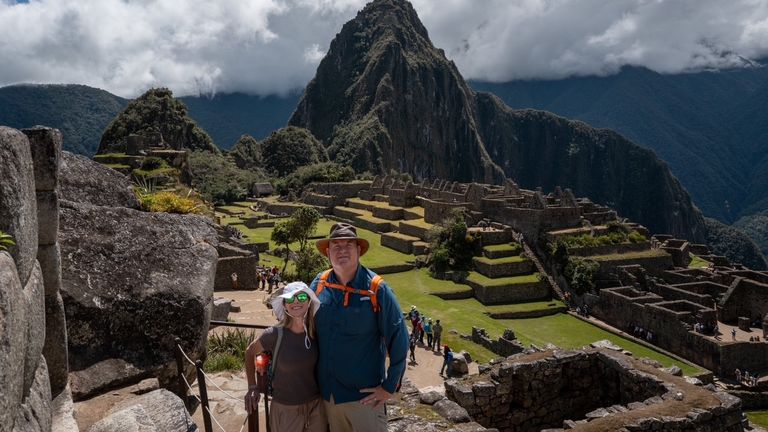 The Alessi's believe people should travel while they can.
Credit: 2026 Heirloom Journeys"For somebody that's hearing impaired or has autism, there should be a way for you to communicate that maybe this person needs to be seated in an area that's not near the kitchen, where there's a lot of extra noise,” she said.
Other information she would love to give restaurants involves her clients’ comfort with noise levels, crowds and ability to navigate the distance from a table to the restroom.
“Do they have to walk through 15 other tables to get to the bathroom? That's going to make it more difficult.”
Hearing-accessible options can also fall short, for example, particularly for travelers who already wear hearing aids and can’t use standard tour earbuds.
“It’s all or nothing,” Lee said. “And that’s frustrating.”
A Different Approach
The couple’s method to accessible travel is shaped by lived experience, including learning what works through trial, error and constant adaptation.
Angela notes that like most people, she didn’t know much about accessibility in the travel industry until she met her husband.
“Until we really got into this, I didn't think to ask for any accommodations because I had the same mindset that most people do,” she said.
/Lee-Alessi-is-a-Marine-Corps-veteran..jpg?tr=w-768%2Ch-432%2Cfo-auto "Lee Alessi is a Marine Corps veteran.") Lee Alessi is a Marine Corps veteran.
Lee Alessi is a Marine Corps veteran.
Credit: 2026 Heirloom JourneysThe couple also emphasized the importance of small group tours. They explained that having mobility issues in a small group is more comfortable than being in a bigger group.
“I have learned that if we do a small group with a tour guide, it's better for me,” Lee said. “I don't feel like I'm impacting a bus full of 15 people, so I don't feel as guilty saying my back hurts.”
Rethinking “Accessible”
The Alessis argue that the term “accessible travel” is often misused.
Many equate accessibility solely with wheelchair accommodation, which doesn’t consider travelers with fluctuating mobility, sensory needs or mental health considerations.
“Just because someone isn’t in a wheelchair doesn’t mean they don’t need accommodations,” Angela said.
They also point to gaps in advisor education. While the industry offers extensive training on destinations, luxury travel and niche segments, there are few opportunities to learn about accessibility beyond the basics.
“This is a massively underserved market,” Lee said. “Not ‘here’s a wheelchair,’ but actually understanding what people deal with day to day.”
Social Media Versus Reality
The couple also cautions clients against the “perfect trip” expectations fueled by social media, where destinations are often presented without context.
According to Angela, it’s important to acknowledge when a traveler’s first-choice destination won’t meet their accessibility needs and to confidently offer an alternative that delivers a similar experience. Still, she said, many people resist that option, fearful that it will feel inferior to the destinations they see on social media.
For advisors, that can mean steering clients away from over touristed areas in favor of alternatives that offer similar experiences with fewer stressors, even for travelers without disabilities.
“Once people experience that,” she said, “they don’t push back anymore.”
A Growing Demand
As populations age and more travelers manage certain conditions, the Alessis believe demand for accessibility planning will only increase, creating both a responsibility and an opportunity for advisors.
“You don’t have to serve every niche,” Angela said. “But the industry should at least acknowledge this one exists.”
For the Alessis, the goal isn’t limiting travel, it’s making it possible, realistic and sustainable for more people.
“You should travel while you can,” Lee said. “There may not be a tomorrow. So, plan for the body you have today.”
